
Female genital cosmetic surgery has evolved significantly over the last two decades, driven by advances in surgical technique, anatomical research, and patient-centered outcomes. Among the most commonly requested procedures is labiaplasty with clitoral hood reduction, particularly in urban medical centers where patients seek specialized care. In New York City, combining these procedures is increasingly common in appropriately selected patients seeking comprehensive anatomical correction.
This article provides a scientific and clinical perspective on why women seek labiaplasty, why clitoral hood procedures are frequently indicated, and how specialists in clitoral hood reduction in NYC evaluate and perform these surgeries safely and effectively.
Understanding Labiaplasty From an Anatomical and Clinical Perspective
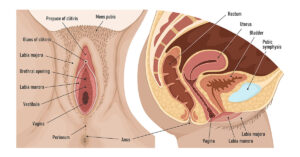
Labiaplasty is a surgical procedure designed to reduce or reshape the labia minora and, in some cases, the labia majora. While aesthetic motivations are frequently discussed, clinical studies demonstrate that the primary drivers include chronic irritation, dyspareunia, interference with exercise, hygiene difficulties, and mechanical discomfort from clothing1.
From an anatomical standpoint, the labia minora vary widely in size, thickness, and symmetry. Excess labial tissue may cause traction on surrounding structures during movement or intimacy. This explains why women seek labiaplasty not only for cosmetic reasons but also for functional relief and improved quality of life.
In modern practice, female genital cosmetic surgery in NYC increasingly assesses adjacent structures, including the clitoral hood, to ensure proportionate outcomes.
Clitoral Hood Anatomy and Its Role in Surgical Planning
The clitoral hood, or prepuce, is a fold of tissue that covers and protects the clitoral glans. It plays a protective role, but excessive redundancy may contribute to discomfort or imbalance after labiaplasty.

Clitoral hood reduction does not involve direct alteration of the clitoral body and is designed to preserve neurovascular structures through careful, nerve-sparing technique. Instead, carefully planned excision of redundant preputial tissue is performed while preserving innervation and vascular supply.
A thorough understanding of dorsal clitoral nerve anatomy is essential. Safe surgical planes exist when the procedure is performed by a trained labiaplasty specialist in NYC with experience in combined procedures.
Why Combining Labiaplasty and Clitoral Hood Reduction Is Often Medically Indicated

Achieving Anatomical Balance and Symmetry
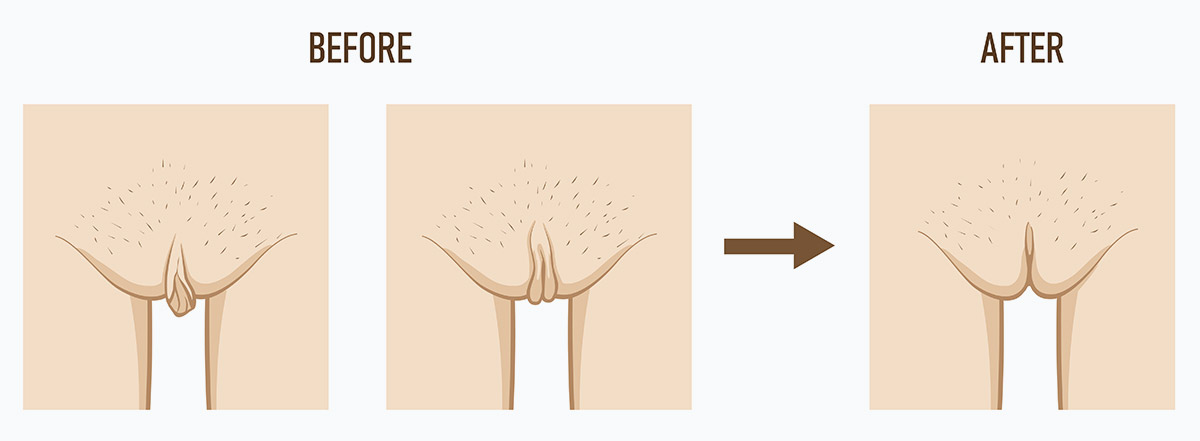
When labiaplasty is performed alone, reduction of the labia minora may expose excess clitoral hood tissue that was previously less noticeable. This can result in disproportionate anatomy.
Combining labiaplasty and clitoral hood reduction allows surgeons to harmonize tissue contours, ensuring that the vulvar structures maintain natural proportions. This approach is widely accepted in advanced genital aesthetic surgery literature.
Functional Comfort and Reduced Mechanical Irritation
Excess clitoral hood tissue may fold or bunch during movement, contributing to friction and irritation. Patients undergoing labiaplasty with clitoral hood reduction frequently report improved comfort during exercise, prolonged sitting, and daily activities.
Clinical reports indicate that addressing both structures simultaneously leads to superior functional outcomes compared to isolated labiaplasty in appropriately selected patients2.
Sensory Considerations and Sexual Function
One of the most important concerns patients express relates to sensation, since excess preputial tissue can interfere with stimulation by limiting exposure of the clitoral glans.
Among the documented benefits of clitoral hood reduction is improved sexual comfort without compromising sensation, provided that surgery is performed with meticulous nerve-sparing technique. This reinforces the importance of selecting an experienced provider of clitoral hood reduction in NYC.
Advantages of a Single Combined Surgical Procedure

Reduced Anesthesia Exposure and Recovery Time
Performing clitoral hood reduction and labiaplasty in NYC during the same operative session minimizes total anesthesia exposure. It also allows patients to undergo a single postoperative healing period rather than two separate recoveries.
Optimized Healing Dynamics
Tissue edema, inflammation, and wound remodeling occur concurrently, which can reduce cumulative scarring and improve final outcomes. This is particularly relevant in delicate anatomical regions.
Cost Efficiency and Surgical Planning
From a clinical logistics standpoint, combining procedures reduces facility costs and surgical redundancy while allowing comprehensive correction based on a single anatomical assessment.
Patient Selection Criteria for Combined Procedures
Not every patient requires clitoral hood surgery. Appropriate candidates for labiaplasty with clitoral hood reduction typically present with:
- Redundant preputial tissue extending beyond the clitoral glans
- Asymmetry or hood enlargement unmasked by labial reduction
- Functional symptoms such as irritation or discomfort
- Clear understanding of risks, benefits, and recovery expectations
Experienced labiaplasty specialists in NYC perform detailed physical examination and surgical mapping before recommending combination surgery.
Surgical Technique and Intraoperative Considerations

Clitoral hood reduction is performed using conservative tissue excision patterns placed laterally or superiorly to avoid neurovascular injury. Surgeons rely on magnification and precise dissection techniques to preserve sensation.
The procedure is typically performed under local anesthesia with sedation or general anesthesia, depending on patient preference and complexity. When combining labiaplasty and clitoral hood reduction, total operative time usually ranges from 60 to 90 minutes.
Postoperative Healing and Recovery Expectations
Immediate Postoperative Phase
Swelling and bruising are expected during the first one to two weeks. Ice application, compression garments, and activity modification are essential.
Intermediate Healing Phase
By weeks three to four, most patients resume light activities. Sutures dissolve naturally, and tissue remodeling progresses.
Long-Term Recovery
Complete healing and scar maturation may take several months. Patients undergoing clitoral hood reduction and labiaplasty recovery are advised to avoid sexual activity and high-impact exercise for four to six weeks.
When performed together by an experienced surgeon, the combined procedure generally follows a recovery timeline similar to labiaplasty alone.
Safety, Complication Risk, and Surgeon Expertise

Published complication rates for labiaplasty and clitoral hood procedures are low when performed by trained specialists. Potential risks include delayed healing, asymmetry, infection, or sensory changes, though these are uncommon.
The most significant determinant of safety is surgeon expertise. Patients seeking female genital cosmetic surgery in NYC should prioritize board certification, anatomical training, and documented experience with combined procedures.
Frequently Asked Questions
Does clitoral hood reduction affect sensation?
When performed correctly, a clitoral hood reduction preserves the dorsal clitoral nerves. A majority of patients often report stable or improved sexual sensation after the procedure.
Is recovery longer when combining procedures?
Recovery timelines for combined clitoral hood reduction and labiaplasty are comparable to those of labiaplasty alone when proper postoperative care is followed.
How do I choose the right labiaplasty specialist in NYC?
Look for a labiaplasty specialist in NYC with extensive experience in combined vulvar procedures, published outcomes, and a thorough consultation process. At Labiaplasty NYC, our team of experts have extensive experience performing labiaplasty with clitoral hood reduction using advanced, anatomy-focused techniques. To learn whether this procedure is right for you, schedule a private, personalized consultation with our team today.
A Medically Guided Approach to Personalized Surgical Outcomes
Choosing labiaplasty with clitoral hood reduction is a nuanced decision that requires anatomical expertise, individualized assessment, and evidence-based surgical planning. In experienced hands, labiaplasty and clitoral hood reduction in NYC can deliver balanced aesthetics, improved comfort, and durable functional benefits while maintaining safety and sensation.
Patients considering combining labiaplasty and clitoral hood reduction should seek consultation with a qualified specialist who approaches female genital surgery as both a scientific discipline and a patient-specific intervention.
References
- Goodman MP. Female genital cosmetic and plastic surgery: a review. J Sex Med. 2011;8(6):1813-1825. doi:10.1111/j.1743-6109.2011.02254.x
- Xia Z, Liu CY, Yu N, et al. Three-step excision: an easy way for composite labia minora and lateral clitoral hood reduction. Plast Reconstr Surg. 2021;148(6):928e-935e. doi:10.1097/PRS.0000000000008589