Table of Contents:
- Introduction
- Does Labiaplasty Leave Scars?
- What Do Labiaplasty Scars Typically Look Like?
- What a Mature Scar May Look and Feel Like
- When the Scar May Be Abnormal
- Where Are Labiaplasty Scars Located?
- Factors That Can Affect Scar Healing
- How to Minimize Labiaplasty Scarring
- When to Contact Your Surgeon
- FAQs on Labiaplasty Scars
- Conclusion
- References
Labiaplasty is a surgical procedure that reduces or reshapes the labia minora, most often to relieve physical discomfort, correct asymmetry, or address other concerns about appearance. Because the operation requires the removal of tissue and closure of an incision, some degree of labiaplasty scar formation is unavoidable.
In most uncomplicated cases, however, the scar becomes soft, flat, and difficult to distinguish from the natural folds, texture, and color variations of the labia once healing is complete. A review of long-term outcomes involving 748 patients reported clinically documented scarring in 1.87% of patients, suggesting that noticeable or problematic scars are uncommon.1
The final appearance of scar tissue after labiaplasty can be affected by the surgical method, incision placement, wound tension, infection, wound separation, nicotine exposure, postoperative care, and the patient’s individual healing response. It is therefore important that clients know about possible complications. While careful surgical planning and appropriate aftercare can help optimize healing, variations in scar appearance are a normal part of the recovery process.
Understanding these factors allows patients to have realistic expectations and recognize potential complications that may affect the final result.2
Does Labiaplasty Leave Scars?
The procedure cannot be described as completely scar-free because every surgical incision heals with some labiaplasty scar tissue, so the simple answer is yes: a labiaplasty surgery does leave scars. The more useful question is whether the scar will remain noticeable. In most uncomplicated cases, the incision gradually becomes difficult to distinguish from the natural folds and texture of the labia as healing progresses.3
The position of the scar depends partly on the surgical technique. With a trim labiaplasty, excess tissue is removed along the outer edge of the labia minora, leaving a fine scar along the newly shaped border. This is the most common form of scar tissue on the labia edges after surgery. With a wedge labiaplasty, a V-shaped section of tissue is removed, and the remaining edges are brought together, creating a shorter scar across the labium while preserving more of its natural outer edge. Neither technique is automatically superior for every patient. The appropriate method depends on the anatomy, the amount and location of excess tissue, the desired result, and the surgeon’s experience.4, 5
During early recovery, the incision may appear pink, red, darker than the surrounding tissue, slightly raised, firm, or uneven. This does not necessarily indicate permanent scarring. Surgical scars continue to remodel after the wound has closed as collagen is reorganized and the tissue gradually softens and flattens. The appearance may continue to improve for several months.3
A scar is more likely to become noticeable when healing is complicated by excessive wound tension, infection, bleeding, wound separation, tissue trauma, or removal of too much tissue. Poorly positioned incisions may also produce visible irregularities, scalloped edges, or scar contracture. Careful technique is therefore important not only for reducing the size of the labia, but also for preserving the natural border, blood supply, sensation, and minimizing the appearance of scars.4 A well-healed scar on the labia tissue should be barely noticeable once recovery is complete.
What Do Labiaplasty Scars Typically Look Like?
Labiaplasty scars change considerably during recovery. What looks prominent in the first few weeks often becomes much less noticeable as swelling resolves and the scar matures. Because labia scar tissue responds differently in every patient, timelines can vary. The exact appearance depends on the surgical technique, incision placement, skin pigmentation, healing response, and whether any wound complications occur.
The First Few Weeks

Early in recovery, the incision may look pink, red, purple, or darker than the surrounding tissue. It may also appear slightly raised, firm, swollen, or irregular. Small knots from dissolvable sutures can make parts of the incision look bumpy, while bruising and uneven swelling may temporarily exaggerate differences between the two sides.
At this stage, the scar may feel tender, tight, itchy, numb, or unusually sensitive. These sensations are a normal part of early healing and do not mean a scar on the labia tissue is developing abnormally. These findings are commonly related to inflammation, sutures, early collagen formation, and temporary changes in small sensory nerves rather than the permanent appearance of the scar.
One to Three Months
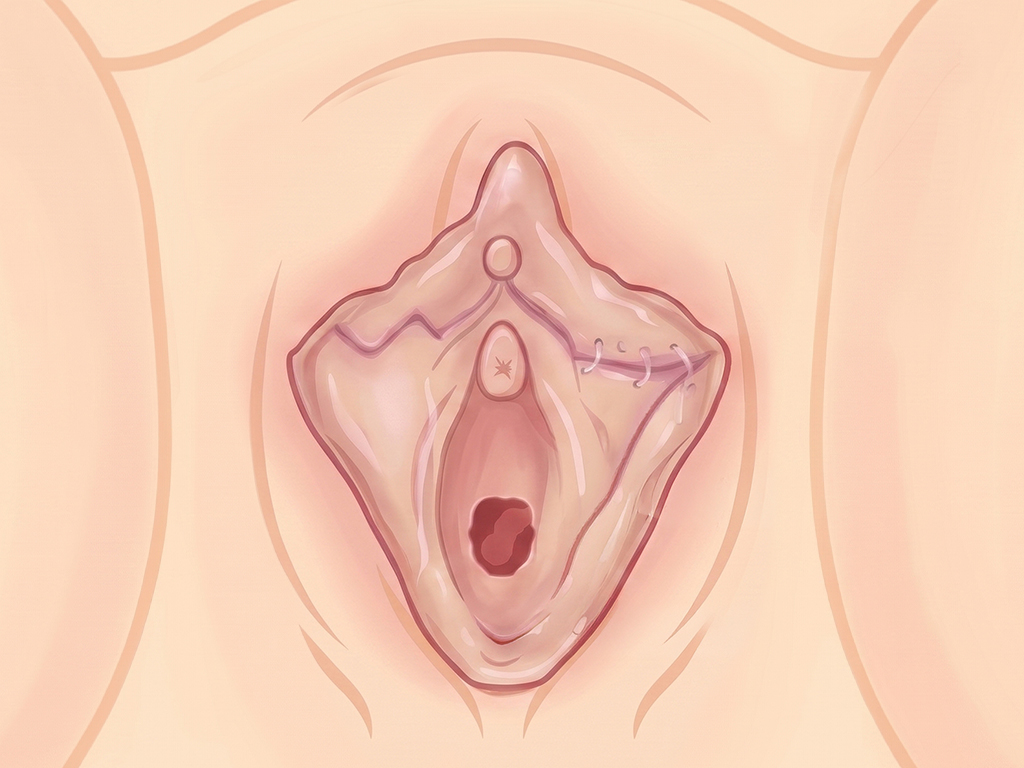
As the wound gains strength, redness and swelling usually begin to decrease. The scar may still feel firmer than the surrounding tissue because collagen is being deposited and reorganized. It can remain pink or darker in some patients, particularly in skin that is naturally more prone to post-inflammatory pigmentation.
The incision may also look slightly uneven while residual swelling and dissolving sutures are still present. This is a normal stage in how labia scar tissue matures and is not cause for concern on its own. A scar should therefore not be judged solely by its appearance during this period.
Three to Twelve Months

Over the following months, most uncomplicated scars gradually become flatter, softer, paler, and more flexible. Scar maturation is a slow process, and research on surgical scars shows that visible and microscopic changes may continue for approximately a year or longer.6
Because the labia naturally contain folds, color variation, and an irregular surface texture, a mature scar may blend into the surrounding anatomy. By this point, scar tissue after labiaplasty is usually much less noticeable than it was in the early weeks. In clinical reports of successful labiaplasty, scars are often described as inconspicuous or not readily visible at later follow-up. 2
What a Mature Scar May Look and Feel Like
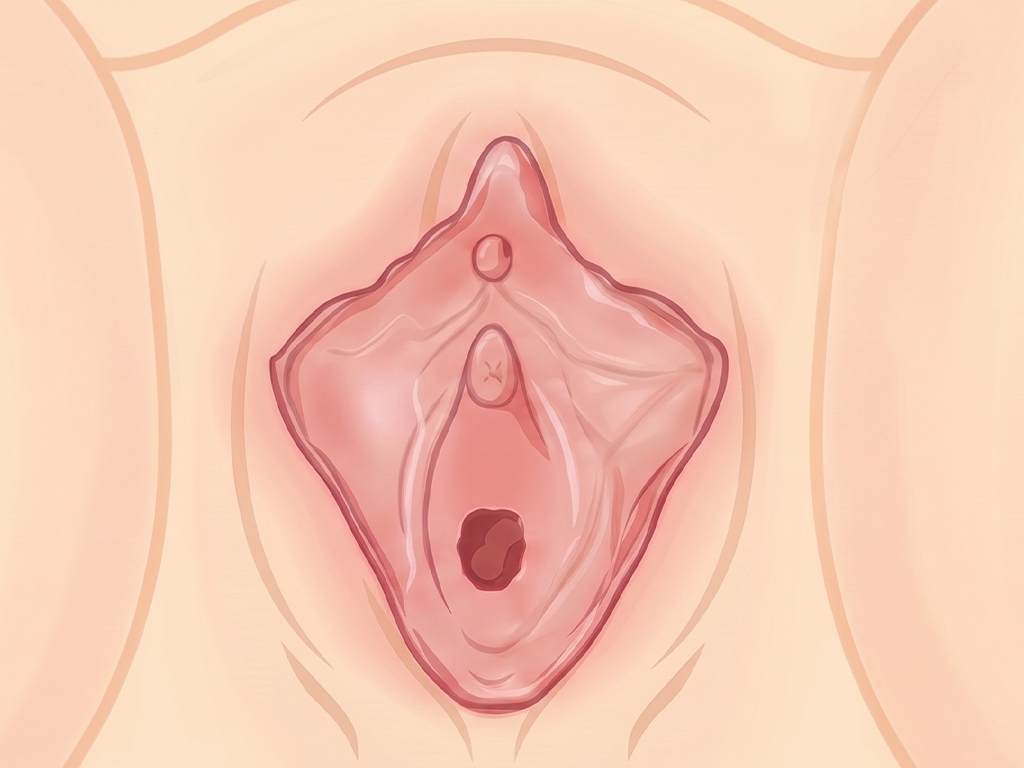
Once fully matured, a typical labiaplasty scar may appear as:
- a fine line along the labial edge after a trim procedure;
- a short transverse or angled line within the labium after a wedge procedure;
- a slightly lighter or darker line than the surrounding tissue;
- a soft, narrow area that is easier to feel than to see; or
- a subtle change in texture where the incision healed.
Overall, mature labiaplasty scar tissue tends to blend into the natural texture of the labia rather than standing out.
When the Scar May Be Abnormal
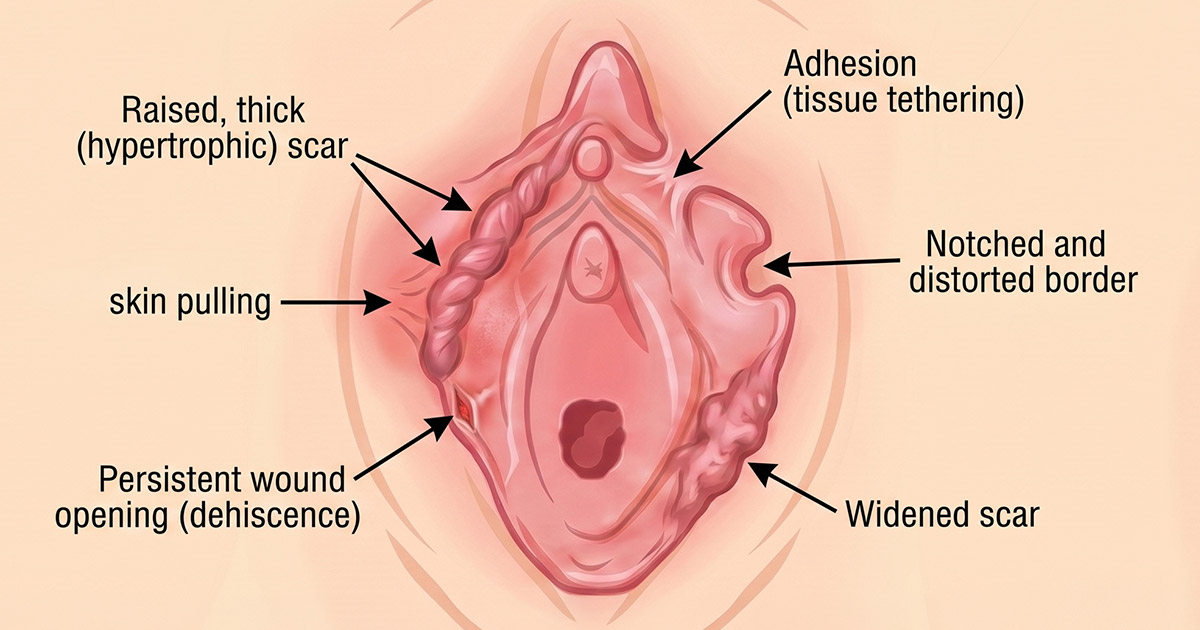
A scar deserves assessment if it becomes increasingly raised, thick, painful, tight, hypersensitive, or associated with pulling or distortion of the labial edge. Painful scar tissue after labiaplasty that continues rather than improving over time is not typical and should be evaluated. Other concerning appearances include a widened scar, persistent wound opening, a notched border, adhesions, or a scar that interferes with exercise or sexual activity. Scarring, adhesions, altered sensation, pain, and the possible need for revision are recognized complications that should be discussed before genital cosmetic surgery. 2
The most reliable way to assess a labiaplasty scar is by its overall direction of change. A scar that gradually becomes finer and less noticeable is usually following the expected course. A scar that is worsening or distorting the tissue should be reviewed by the surgeon.
Where Are Labiaplasty Scars Located?

The location of a labiaplasty scar depends mainly on the surgical technique used and the area of tissue being reduced. Most labiaplasties involve the labia minora, so the incision remains within the external vulvar tissues rather than extending into the vaginal canal.
Trim Labiaplasty
With the trim, or edge-resection, technique, excess tissue is removed directly from the free outer border of the labia minora. The scar therefore runs lengthwise along the newly shaped labial edge, extending over the portion that was reduced.7
Because this incision follows the natural border, it is usually concealed within the folds and surface irregularities of the labia once healing is complete. This makes trim-technique scar tissue on the labial edge among the least noticeable of all labiaplasty scars. The trim technique also removes the original outer edge, including any darker pigmentation or irregular tissue contained within it.
Wedge Labiaplasty
With a wedge labiaplasty, a V-shaped or pie-shaped section is removed from the most prominent part of the labium. The remaining tissue edges are then brought together. This places the scar across the labium at the site of the wedge rather than along its full outer border.8
The exact position varies. A central wedge produces a scar within the middle portion of the labium, while posterior or extended wedge techniques may place it farther back or extend the incision toward nearby tissue. Because the natural free edge is preserved, the scar is generally shorter than the incision created by a full trim procedure.8 The resulting labia scar tissue is often positioned where it is less visible during everyday activity.
De-Epithelialization Labiaplasty
In a de-epithelialization procedure, surface tissue is removed from a central area on the inner and outer surfaces of the labia minora without cutting away the natural free border. The resulting scars are therefore located on the flat surfaces of the labia rather than directly along its edge. 9
This technique is generally used for selected patients because it reduces tissue height while preserving the original border. It may be less suitable when a large amount of tissue must be removed. Because the border itself is untouched, any resulting scar on the labia surfaces tends to sit flat against the tissue rather than along a visible edge.
Factors That Can Affect Scar Healing
The final appearance of a labiaplasty scar is determined by both the operation and the patient’s healing response. Although most scars become subtle, several factors can make a scar wider, firmer, uneven, painful, or more noticeable. Recognizing these factors can help patients understand why scar tissue on the labial areas heals differently from one person to the next.
Surgical Technique and Wound Tension
Precise tissue removal, accurate alignment of the wound edges, preservation of blood supply, and closure without excessive tension all support better scar formation. Technique also matters because labiaplasty methods have different complication profiles. For example, wedge procedures have been associated with a higher risk of wound separation in pooled studies, and any separation may leave a wider or less even scar. Surgeons therefore weigh technique carefully to keep resulting labiaplasty scar tissue as fine and flat as possible.
Individual Healing and Genetics
People do not produce or remodel collagen in the same way. A personal or family history of hypertrophic scars or keloids may indicate a greater tendency toward raised scarring, although this cannot predict an individual result with certainty. Genetic susceptibility appears to involve several interacting genes rather than one single inherited cause, and most of this evidence comes from skin scars generally rather than labiaplasty-specific research.
Infection, Bleeding, and Wound Separation

Infection prolongs inflammation and can interfere with normal collagen remodeling. A hematoma, persistent bleeding, or an incision that opens may also increase tissue damage and delay closure, making an irregular or widened scar more likely. Increasing pain, spreading redness, foul-smelling drainage, fever, or progressive wound opening should therefore be assessed promptly. Painful scar tissue after labiaplasty combined with these warning signs points toward a complication rather than normal healing.
Smoking and Nicotine Exposure

Smoking reduces oxygen delivery to healing tissue and is associated with higher rates of surgical-site infection, delayed healing, and wound disruption. Evidence also shows that stopping smoking before surgery reduces postoperative complications. Clients should discuss cigarettes, vaping, nicotine pouches, and nicotine-replacement products with their surgeon.
Postoperative Care

The incision is most vulnerable before it has developed adequate strength. Friction, premature sexual activity, strenuous exercise, cycling, or repeatedly stretching the area may place unnecessary tension on the closure. Poor hygiene can increase contamination, while aggressive washing, scrubbing, or unapproved topical products may irritate the wound.
Following the operating surgeon’s instructions and attending follow-up appointments allows problems to be identified before they affect the final scar. Good wound care in these early weeks is one of the most effective ways to protect scar tissue after labiaplasty as it forms.
General Health

Conditions that impair circulation, immune function, or tissue repair may delay healing. Diabetes, nutritional deficiency, anemia, corticosteroid use, and other medical factors should be discussed before surgery so that risks can be managed appropriately.
How to Minimize Labiaplasty Scarring
The following practical steps can help the incision heal cleanly and prevent avoidable complications. However, after all is said and done, it is imperative to allow the scar enough time to mature.
Follow Your Surgeon’s Wound-Care Instructions
Clean and dry the area exactly as directed. Avoid scrubbing, pulling at dissolvable stitches, or applying antiseptics, herbal products, creams, and ointments that your surgeon has not approved. Postoperative instructions may differ according to the technique used and how the incision is healing, so advice given to another patient may not be appropriate for you.
Protect the Incision From Friction and Tension

Wear loose clothing and breathable underwear to reduce rubbing against the surgical area. Penetrative sex, cycling, high-impact exercise, heavy lifting, and other activities that stretch or press against the labia should be avoided until the surgeon confirms that the wound is strong enough. Many patients are advised to avoid intercourse for approximately six weeks, but clearance should be based on actual healing rather than the calendar alone.1,2 Resuming these activities too early is one of the more common causes of painful scar tissue after labiaplasty during recovery.
Avoid Smoking and Nicotine
Stop smoking as it is associated with delayed wound healing, infection, and wound disruption among other things, all of which can make a scar more noticeable. Smoking-cessation interventions before surgery have been shown to reduce surgical-site infections. 3
Support Normal Healing
Adequate protein, fluids, and a balanced diet support tissue repair. Medical conditions that can interfere with healing, such as diabetes or anemia, should also be managed appropriately. Take prescribed medication as directed and attend scheduled follow-up visits, even when recovery appears uncomplicated.
Report Problems Early

Contact the surgeon if pain, swelling, or redness is worsening rather than improving, or if there is persistent bleeding, foul-smelling discharge, fever, or separation of the incision. Infection and wound dehiscence are uncommon after labiaplasty, but both can affect the final contour and scar if treatment is delayed.4,5
Do Not Begin Scar Treatments Too Early

Scar massage, silicone gel, or other treatments should not be used until the incision is completely closed and the surgeon has confirmed that they are appropriate. Silicone products have evidence supporting their use in preventing or improving some postoperative skin scars, but this research is not specific to labiaplasty. Because vulvar tissue is sensitive and continuously exposed to moisture and friction, products that are suitable for scars elsewhere on the body may not be appropriate for the labia without medical guidance.6
When to Contact Your Surgeon

Contact your surgeon if the scar or incision is becoming worse rather than gradually improving. Warning signs include increasing pain, rapidly worsening swelling, spreading redness or warmth, persistent bleeding, foul-smelling or pus-like discharge, fever, wound separation, dark or nonviable tissue, or difficulty urinating. These symptoms may indicate infection, hematoma, impaired blood supply, or wound dehiscence and should be assessed promptly.
After the incision has healed, arrange a review if the scar remains thick, raised, tight, painful, unusually sensitive, or begins to distort the labial edge. Although significant scarring and long-term complications are uncommon, they are recognized outcomes and may require treatment or, occasionally, revision surgery.
FAQs on Labiaplasty Scars
Can labiaplasty scars affect sensation?
Temporary numbness, tingling, or increased sensitivity can occur while small sensory nerves recover. Most available studies report no significant long-term loss of genital sensitivity after uncomplicated labiaplasty.
Can a labiaplasty scar cause pain during sex?
A mature scar should not normally cause persistent pain during intercourse. Pain may occur if the scar becomes tight, tender, adherent, or associated with excessive tissue removal. Persistent pain should be assessed because infection, hormonal dryness, pelvic-floor dysfunction, or another vulvar condition may also be responsible.2,4
Are keloids common after labiaplasty?
Keloids can develop after skin injury, but they appear to be uncommon on the vulva and are not frequently reported after labiaplasty. Patients with a personal or family history of keloids or thick, raised scars should tell their surgeon before surgery because individual susceptibility affects scar formation.5
Can menstruation affect a healing labiaplasty scar?
Menstruation does not usually damage the scar, but blood, moisture, pads, and repeated cleaning may increase irritation during early recovery. Patients should follow their surgeon’s instructions regarding menstrual products and generally avoid inserting tampons or menstrual cups until the incision has healed sufficiently.
Can waxing or laser hair removal affect the scar?
Hair removal should be avoided near the incision until the wound is completely closed and the surgeon has approved it. Waxing, shaving, depilatory creams, and laser treatment can irritate healing tissue or introduce bacteria. Once fully healed, hair removal can usually be resumed cautiously, although the labia minora themselves generally contain little or no hair.
Can the scar become darker than the surrounding tissue?
Yes. Temporary darkening may occur due to inflammation, bruising, hormonal changes, friction, or the patient’s natural tendency toward post-inflammatory hyperpigmentation. Color usually becomes less noticeable as healing progresses, although a slight difference may remain in some patients.
Key Takeaways on Labiaplasty Scarring
Labiaplasty always produces some scar tissue, but in most patients the scar becomes soft, flat, and difficult to distinguish from the natural folds of the labia. The final result depends on careful surgical planning, uncomplicated healing, and appropriate postoperative care. Any scar that remains painful, raised, tight, or visibly distorts the labial edge should be reviewed by an experienced surgeon.
References
- McGrattan M, Majeed A, Hanna SA. Long-term functional and aesthetic outcomes of labiaplasty: a review of the literature. Aesthetic Surgery Journal. 2025;45(2):180-185. doi:10.1093/asj/sjae211.
- American College of Obstetricians and Gynecologists. Elective female genital cosmetic surgery: ACOG Committee Opinion No. 795. Obstetrics & Gynecology. 2020;135(1):e36-e42. doi:10.1097/AOG.0000000000003616.
- Gurtner GC, Werner S, Barrandon Y, Longaker MT. Wound repair and regeneration. Nature. 2008;453(7193):314-321. doi:10.1038/nature07039.
- Motakef S, Rodriguez-Feliz J, Chung MT, et al. Vaginal labiaplasty: current practices and a simplified classification system for labial protrusion. Plastic and Reconstructive Surgery. 2015;135(3):774-788. doi:10.1097/PRS.0000000000001000.
- Géczi AM, Varga T, Vajna R, et al. Comprehensive assessment of labiaplasty techniques and tools, satisfaction rates, and risk factors: a systematic review and meta-analysis. Aesthetic Surgery Journal. 2024;44(11):NP798-NP808. doi:10.1093/asj/sjae143.
- Spielman AF, Griffin MF, Parker J, et al. Beyond the scar: a basic science review of wound remodeling. Advances in Wound Care. 2023;12(2):57-67. doi:10.1089/wound.2021.0143.
- Furnas HJ, Canales FL. Trim labiaplasty. Plastic and Reconstructive Surgery Global Open. 2017;5(5):e1349. doi:10.1097/GOX.0000000000001349.
- Alter GJ. Labia minora reduction using central wedge technique. Clinics in Plastic Surgery. 2022;49(4):447-453. doi:10.1016/j.cps.2022.06.002.
- Choi HY, Kim KT. A new method for aesthetic reduction of labia minora: the deepithelialized reduction labioplasty. Plastic and Reconstructive Surgery. 2000;105(1):419-422. doi:10.1097/00006534-200001000-00067.