Table of Contents:
- Introduction
- Can the Labia Grow Back After Labiaplasty?
- How Long Do Labiaplasty Results Typically Last?
- Factors That Can Affect Long-Term Results
- How to Maintain Long-Lasting Results
- Can Revision Labiaplasty Be Needed?
- When to Speak With a Surgeon About Changes or Concerns
- FAQs on Labiaplasty Results
- Is there an ideal or “normal” labial size after surgery?
- Will labiaplasty interfere with Pap smears or routine gynecologic examinations?
- Is labiaplasty the same as vaginal tightening?
- Can labiaplasty correct every cause of vulvar discomfort?
- Can I use tampons or menstrual cups after labiaplasty?
- Can labiaplasty affect sexual sensation or orgasm?
- Conclusion
- References
Labiaplasty is a surgical procedure that reshapes the external genital tissues, most commonly by reducing or contouring the labia minora, which are the inner folds of tissue on either side of the vaginal opening. This can also be done on the labia majora, which are the bigger folds that surround the minora. The aim is to remove excess, uneven tissue or undesirably shaped labial tissue while preserving natural function and sensation.1

Labiaplasty is performed to improve labial symmetry and appearance and to relieve physical symptoms such as pulling, chafing, irritation, discomfort during walking, exercise or sexual activity. The procedure has a very high patient satisfaction and relatively low complication rate, as seen in published systematic reviews, although outcomes vary with the patient anatomy, surgical technique, and the surgeon’s experience.1,2
Following a labiaplasty procedure, the vulval tissues may continue to respond to aging, hormones, weight changes, and variations in skin and connective-tissue elasticity just like any other part of the body. These factors may alter the size, shape, and firmness of the labia. This later change in appearance does not mean that the tissue removed during labiaplasty has regenerated, as surgically excised labial tissue does not grow back. This is why the results are considered permanent, answering a question many patients have: “Is labiaplasty permanent?” Yes, though the appearance of the remaining tissue can change naturally over the course of a patient’s life.2,3,4
Will Labia Grow Back After Labiaplasty?
No, labia do not grow back after labiaplasty. The tissue reduction is permanent, though the remaining tissue can still change in appearance over time.
During the procedure, the surgeon removes a planned amount of labial tissue and reshapes the remaining tissue. The incision then heals through the body’s normal wound-repair mechanism. New cells close the wound, collagen is deposited, and the scar gradually remodels. While the process repairs the surgical site, it does not recreate the original amount, shape, or structure of the tissue that was removed. 1,2
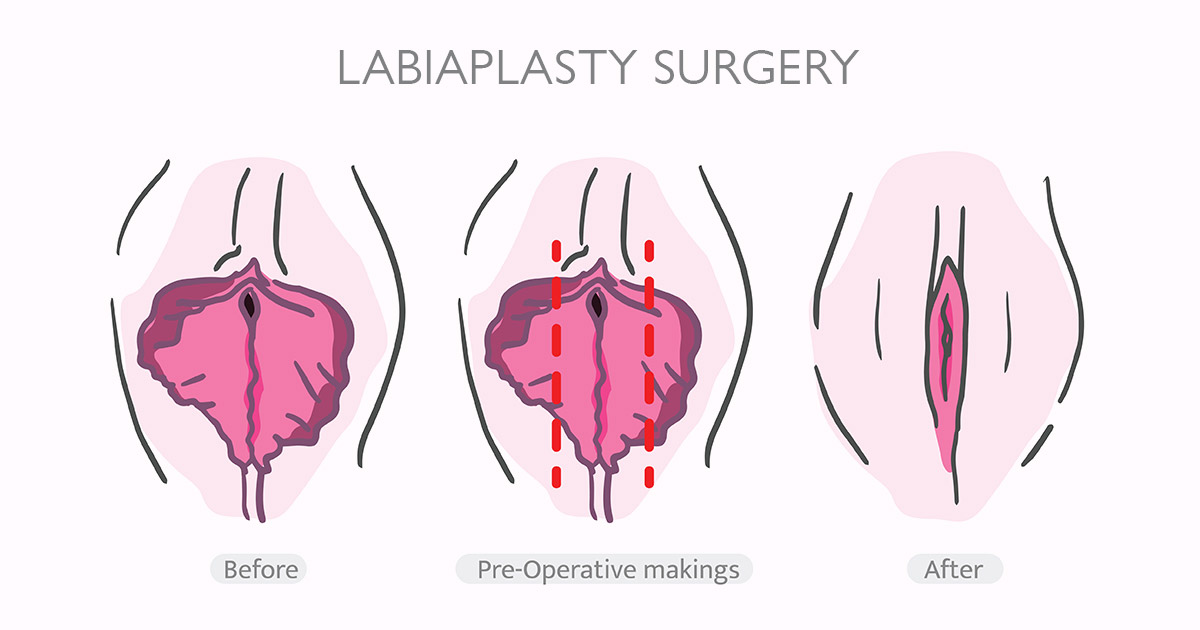
This distinction matters because patients who ask if labia grow back after surgery are often noticing something other than actual tissue regrowth. In many cases, what they are seeing is not new tissue growth but may be:
- Residual labial tissue that was intentionally preserved during surgery
- Postoperative swelling which is temporary
- Firmness or thickness caused by early scar formation
- A change in the remaining tissue later in life
Labiaplasty does not remove all labial tissue, as the surgeon must preserve enough tissue to protect the vaginal opening, maintain a natural contour, avoid excessive tension, and reduce the risk of complications such as painful scarring or over-resection.
The appearance immediately after labiaplasty should not be mistaken for the final result. Swelling, unevenness, firmness, and visible incision lines can make the labia appear larger or less symmetrical during the early stages of healing. These changes usually improve as swelling resolves and scar tissue softens. Final contour is generally assessed only after the tissues have had sufficient time to heal and remodel.
Years after surgery, the tissue that remains can still change. Research shows that vulvar tissues undergo normal structural and physiological changes throughout life, particularly during pregnancy, after delivery, and following the decline in estrogen associated with menopause.3,4 These changes may make the remaining labial tissue appear looser, thinner, more prominent, or different in shape.
Is Labiaplasty Permanent? How Long Do Results Typically Last?
Labiaplasty results are generally considered long-lasting. The tissue removed during surgery does not regenerate, and there is no set point at which the operation “wears off.” Once healing is complete, the reduction in labial tissue is permanent. However, the appearance of the remaining tissue may continue to change naturally with age, pregnancy, childbirth, hormonal changes, injury, and changes in tissue elasticity.
For this reason, it is more accurate to describe labiaplasty as a permanent tissue reduction with results that can evolve. A 2025 review of studies with at least one year of follow-up found that improvements in genital appearance and aesthetic satisfaction were generally maintained over time, with most patients reporting no long-term complications, although the quality and duration of follow-up varied between studies.
In one prospective study, 96% of patients reported improved satisfaction with genital appearance at three months, and 91% remained satisfied during follow-up lasting up to 42 months. Another study found no meaningful difference in appearance satisfaction, functional satisfaction, or achievement of surgical goals between patients followed for less than two years and those followed for longer than two years.
Similarly, a single-center study involving 414 patients reported that approximately 91% were moderately or extremely satisfied with their results.2, 5-7 In practical terms, patients can expect their labiaplasty results to last for many years. The reduction itself is permanent, but the remaining vulvar tissues will continue to respond to the normal biological changes that occur throughout life.
Factors That Can Affect Long-Term Results
Patients often ask what causes labia to grow or change shape years after surgery. The long-term appearance of the labia may be influenced by;

Aging
The vulva changes throughout adult life, just like the skin and soft tissues elsewhere on the body. Over time, collagen and elastin become less abundant and less organized, while the skin may become thinner and less resilient. The labia majora may also lose some of their fatty volume, which can make the labia minora and clitoral hood appear more visible than they did soon after surgery. 8, 9
Pregnancy
Pregnancy produces major hormonal and circulatory changes throughout the body, and is one of the most common answers to what makes labia minora grow or appear fuller after surgery. Increased blood flow to the pelvis, fluid retention, and changes in connective-tissue flexibility can alter the fullness and sensitivity of the vulvar tissues. The amount of change varies considerably, and pregnancy does not automatically reverse a previous labiaplasty.8 Much of this may improve after delivery as hormone levels, blood volume, and swelling return toward their pre-pregnancy state.
Childbirth
Vaginal childbirth places more direct mechanical stress on the vulva and perineum than pregnancy alone. The tissues stretch considerably as the baby passes through the birth canal, and some patients experience tearing, an episiotomy, swelling, bruising, or scar formation. These events may alter the contour or symmetry of the labia, including tissue that was previously reshaped during labiaplasty.
Hormonal Changes and Menopause
Vulvar tissue is responsive to estrogen. During the reproductive years, estrogen helps maintain tissue thickness, blood flow, moisture, and elasticity. As estrogen levels decline during perimenopause and menopause, the vulvar tissues may become thinner, drier, less elastic, and more sensitive. The labia majora may lose volume, while the labia minora may appear flatter, less full, or relatively more exposed. 8,10
Weight Fluctuations
An anatomical study of the fatty portions of the vulva found that women in the higher body mass index group had greater calculated volumes and weights of the mons pubis and labia majora9. Another large study found a modest relationship between body mass index and certain vulvar measurements.10,11 These findings suggest that substantial weight gain or loss may change the proportions of the surrounding vulva and make the labia minora look more or less prominent.
Healing, Scar Formation, and Surgical Technique
The quality of the original surgery and the way the incision heals can have a greater effect on the final result than many later lifestyle factors. The amount of tissue removed, the technique used, preservation of the natural labial border, tension on the closure, infection, wound separation, and scar formation can all influence long-term contour and symmetry.
Lifestyle Factors
Lifestyle has its greatest influence during the healing period. Nicotine exposure reduces tissue oxygenation and is associated with higher rates of wound infection and delayed healing, while a healthy lifestyle can support healing and tissue quality.12
Resuming activities that place pressure or tension on the incision before it has healed may also contribute to bleeding, swelling, or wound separation. Once the tissues are fully healed, normal exercise and sexual activity are not expected to make the removed labial tissue grow back.
How to Maintain Long-Lasting Results
There is no special cream, exercise, supplement, or maintenance procedure proven to preserve a labiaplasty result. The following are a useful and practical guide to achieve a long-lasting outcome.

Follow the Instructions Provided for Your Procedure
Postoperative instructions reflect the technique used, the extent of tissue removal, the condition of the wound, and the patient’s general health. This matters because recovery protocols are not identical across surgeons or surgical techniques. Medications, cleansing instructions, dressings, and topical products should be used only as directed. Applying antiseptics, fragranced products, or over-the-counter creams without approval may irritate the vulvar tissues or make it more difficult to recognize an emerging wound problem.
Give the Incision Enough Time to Heal
The quality of the final result is influenced by what happens while the wound is developing its own strength. Activities that create direct friction, pressure, stretching, or repeated movement across the incision should be resumed only when the surgeon considers the wound sufficiently healed. This may include penetrative sex, cycling, high-impact exercise, heavy lifting, and other activities that place tension on the vulva. There is no single return-to-activity date that is appropriate for every patient. Clinical healing is more important than simply reaching a particular number of weeks after surgery.
Avoid Smoking, Vaping, and Nicotine During Recovery
Avoiding nicotine is one of the clearest modifiable steps a patient can take to support surgical healing. Nicotine and tobacco smoke can impair oxygen delivery and interfere with several cellular processes involved in wound repair. 12 Clients should discuss cigarettes, vaping, nicotine patches, gum, and other nicotine-containing products with their surgeon. The appropriate cessation plan may differ depending on nicotine dependence and the patient’s medical history.
Support Healing With Adequate Nutrition
Wound repair requires sufficient energy, protein, fluids, vitamins, and minerals. Malnutrition and significant nutritional deficiencies are associated with impaired healing and a greater risk of postoperative complications. A balanced diet containing adequate protein, fruits, vegetables, whole grains, and healthy fats is generally more useful than relying on one heavily marketed “healing” supplement.
Keep Medical Conditions Well Managed
Conditions that interfere with circulation, immunity, or wound repair should be managed before and after surgery. Patients should follow instructions concerning prescribed medications and should not stop blood thinners, steroids, diabetes treatment, or other important medication without speaking with the clinician responsible for their care.
Attend Follow-Up Appointments
Follow-up visits allow the surgeon to assess wound closure, swelling, scar development, symmetry, and the return to normal activity. They also provide an opportunity to manage localized irritation, scar thickening, or a small area of wound separation before it becomes a larger concern. Labiaplasty is generally associated with low overall complication rates, but complications such as dehiscence, asymmetry, scarring, infection, and the need for reoperation have been reported and are better addressed promptly.
Can Revision Labiaplasty Be Needed?
Yes, but revision labiaplasty is not routinely necessary, and most patients remain satisfied with their original procedure. A 2025 review of nine studies involving 748 patients reported revision surgery in 42 patients, or 5.61%. This pooled figure should not be treated as a universal revision rate because the studies used different techniques, definitions, surgeons, and follow-up periods.2
Why a patient may consider revision labiaplasty
The following are reasons why a patient may think about having a revision labiaplasty.
- More tissue remaining than the patient expected
- Persistent or new asymmetry
- Irregular, scalloped, or uneven labial edges
- A scar that is painful, thick, tight, or visibly distorting the tissue
- Wound separation that healed with an altered contour
- Ongoing pulling, chafing, discomfort, or interference with sexual activity
- Excessive tissue removal resulting in shortening, distortion, or loss of the normal labial border
- Later anatomical changes that create a new functional or cosmetic concern
When Should Revision Be Considered?
Revision labiaplasty can only be considered based on a clear anatomical or functional indication rather than a temporary postoperative appearance. A result should not be judged while significant swelling and scar remodeling are still present. Unless there is an urgent complication, revision is generally discussed only after the tissues have healed sufficiently for the surgeon to identify what is permanent and what is still changing.
Before recommending another procedure, the surgeon should determine whether the concern is caused by residual anatomy, scar tissue, a healing complication, altered expectations, or a separate vulvar condition. The discussion should also address what revision can realistically improve and whether further surgery could create additional scarring, asymmetry, or tissue loss.
When to Speak With a Surgeon About Changes or Concerns
Contact your surgeon if recovery is moving in the wrong direction rather than gradually improving. Warning signs include worsening pain, rapidly increasing swelling, persistent bleeding, foul-smelling or pus-like discharge, spreading redness, fever, difficulty urinating, wound separation, or darkening tissue. These symptoms may indicate infection, hematoma, impaired wound healing, or another complication that should be assessed promptly.
After healing, arrange a review if you have persistent asymmetry, a painful or tight scar, ongoing numbness or hypersensitivity, discomfort during exercise or sexual activity, recurrent irritation, or any dissatisfaction that remains. Any new lump, sudden enlargement, ulcer, unexplained bleeding, or significant change appearing months or years later should also be examined.
FAQs on Labiaplasty Results
Is there an ideal or “normal” labial size after surgery?
No. Labial size, shape, color, and symmetry vary widely among healthy women, and there is not one measurement that should be considered the ideal result. Patients who wonder what causes labia to grow in size over time are often noticing normal biological variation rather than a change caused by surgery. The goal of surgery should be a proportionate outcome that addresses the patient’s symptoms and preferences while preserving normal anatomy and function.
Will labiaplasty interfere with Pap smears or routine gynecologic examinations?
A standard labiaplasty reshapes the external labial tissue and does not involve the cervix, uterus, or deeper vaginal canal. Once healing is complete, it should not prevent routine pelvic examinations, Pap smears, or other gynecologic care. Clients should tell their clinician about recent surgery if the area remains tender or is still healing.
Is labiaplasty the same as vaginal tightening?
No. Labiaplasty changes the labia, which are part of the external genitalia. Procedures such as vaginoplasty or perineoplasty involve the vaginal opening, vaginal canal, or perineal muscles and are performed for different reasons.
Can labiaplasty correct every cause of vulvar discomfort?
No. Chafing or pulling caused by prominent labial tissue may improve after surgery, but itching, burning, pain, swelling, or pain during intercourse may also result from infection, vulvar skin disease, hormonal dryness, pelvic-floor dysfunction, or another gynecologic condition.
Can I use tampons or menstrual cups after labiaplasty?
Postoperative guidance commonly recommends waiting approximately four to six weeks, although the correct timing depends on individual healing. They should not be inserted during early recovery because pressure and friction may irritate or bruise the surgical area.
Can labiaplasty affect sexual sensation or orgasm?
Labiaplasty is not intended to alter the clitoris or the nerves responsible for orgasm. Current studies generally report unchanged or improved sexual function after surgery.
Conclusion
Labiaplasty permanently removes selected labial tissue, so the excised tissue does not grow back. What may change over time is the appearance of the tissue that remains, as it continues to respond to healing, aging, hormones, pregnancy, childbirth, and natural differences in tissue elasticity. Most results are long-lasting, but any sudden, painful, or one-sided change should be assessed rather than assumed to be regrowth.
References
- Géczi AM, Varga T, Vajna R, et al. Comprehensive assessment of labiaplasty techniques and tools, satisfaction rates, and risk factors: a systematic review and meta-analysis. Aesthetic Surgery Journal. 2024;44(11):NP798-NP808. doi:10.1093/asj/sjae143.
- McGrattan M, Majeed A, Hanna SA. Long-term functional and aesthetic outcomes of labiaplasty: a review of the literature. Aesthetic Surgery Journal. 2025;45(2):180-185. doi:10.1093/asj/sjae211.
- Farage MA, Maibach HI. Morphology and physiological changes of genital skin and mucosa. Current Problems in Dermatology. 2011;40:9-19. doi:10.1159/000321042.
- Dominoni M, Gritti A, Bergante C, et al. Genital perception and vulvar appearance after childbirth: a cohort analysis of genital body image and sexuality. Archives of Gynecology and Obstetrics. 2023;307(3):813-819. doi:10.1007/s00404-022-06826-4.
- Veale D, Naismith I, Eshkevari E, et al. Psychosexual outcome after labiaplasty: a prospective case-comparison study. International Urogynecology Journal. 2014;25:831-839. doi:10.1007/s00192-013-2297-2.
- Sharp G, Tiggemann M, Mattiske J. Psychological outcomes of labiaplasty: a prospective study. Plastic and Reconstructive Surgery. 2016;138(6):1202-1209. doi:10.1097/PRS.0000000000002751.
- Qiang S, Li FY, Zhou Y, Cao YJ, Liu MC, Li Q. Long-term follow-up in labiaplasty in 414 women: a single-center experience in China. Annals of Plastic Surgery. 2022;89(4):353-357.
- Farage MA, Maibach HI. Lifetime changes in the vulva and vagina. Archives of Gynecology and Obstetrics. 2006;273(4):195-202. doi:10.1007/s00404-005-0079-x.
- Seleem M, Osman OM, Kashmar SG, Lotfy R. Dimensions, ratios, volumes, and weights of the fatty parts of the vulva: mons pubis and labia majora. Aesthetic Surgery Journal. 2023;43(9):1002-1012. doi:10.1093/asj/sjad106.
- Kreklau A, Vaz I, Oehme F, et al. Measurements of a “normal vulva” in women aged 15-84: a cross-sectional prospective single-center study. BJOG. 2018;125(13):1656-1661. doi:10.1111/1471-0528.15387.
- Agrawal N, Singh P, Ghuman NK, et al. The anatomical measurements of vulva in Indian women: a cross-sectional prospective study. International Journal of Gynecology & Obstetrics. 2022;156(3):436-442. doi:10.1002/ijgo.13936.
- Sørensen LT. Wound healing and infection in surgery: the clinical impact of smoking and smoking cessation. Archives of Surgery. 2012;147(4):373-383. doi:10.1001/archsurg.2012.5.