
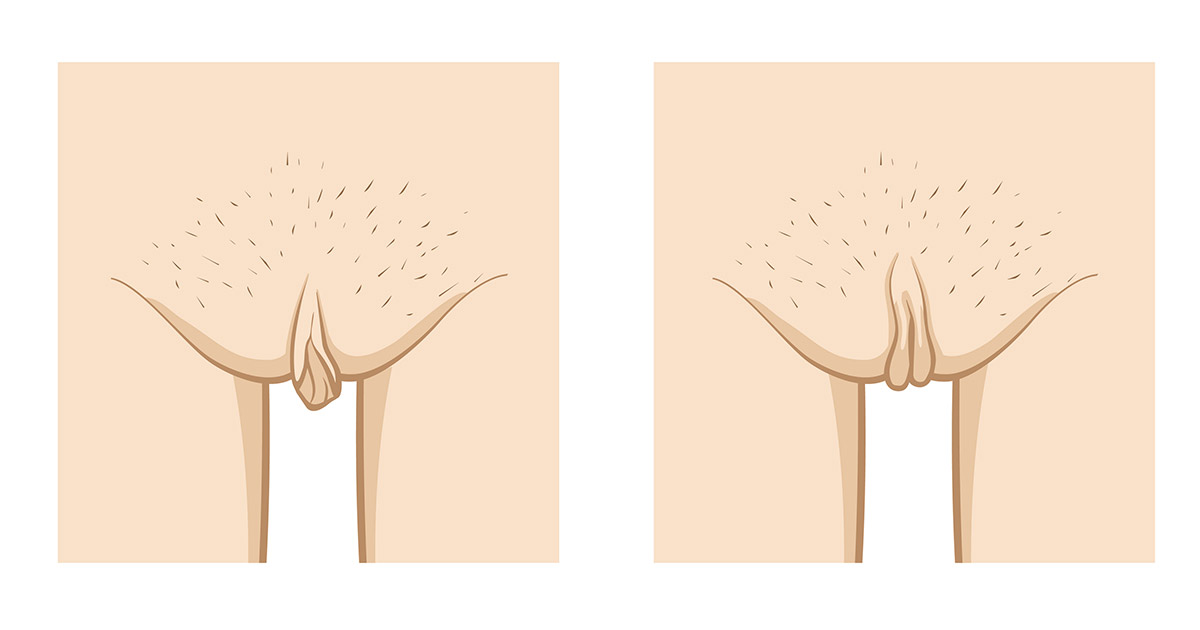
Si ha notado que sus labios menores se extienden más allá de los labios mayores de la vulva, es posible que se trate de una variación anatómica normal. En algunos casos, cuando el tejido aumenta considerablemente de tamaño y provoca síntomas funcionales, los médicos pueden denominarlo hipertrofia labial. Muchas mujeres se preguntan hasta qué punto es frecuente que sobresalgan los labios menores, y la respuesta puede ser tranquilizadora: la protrusión visible de los labios internos es una variación anatómica frecuente y totalmente normal.1.
En la mayoría de los casos, no se trata de un problema médico. El tamaño, la forma, el color y la simetría de los labios varían mucho de una persona a otra, y no existe una norma única sobre el aspecto que «deberían» tener. Sin embargo, si el aspecto o el tamaño de sus labios le causa molestias físicas, irritación o afecta a su confianza, pedir consejo a un profesional médico cualificado puede ayudarle a comprender mejor sus opciones.
En este artículo, examinaremos las causas de la hipertrofia labial desde la perspectiva de un especialista y esbozaremos cuándo puede ser apropiada una evaluación o un tratamiento.
¿Es frecuente que sobresalgan los labios menores?
Es frecuente que los labios menores sobresalgan de los labios externos. Muchas mujeres presentan algún grado de protrusión o asimetría. La idea errónea de que siempre deben estar ocultos se debe en gran medida a las imágenes poco realistas de la publicidad, los medios para adultos e incluso ciertos diagramas médicos.2.
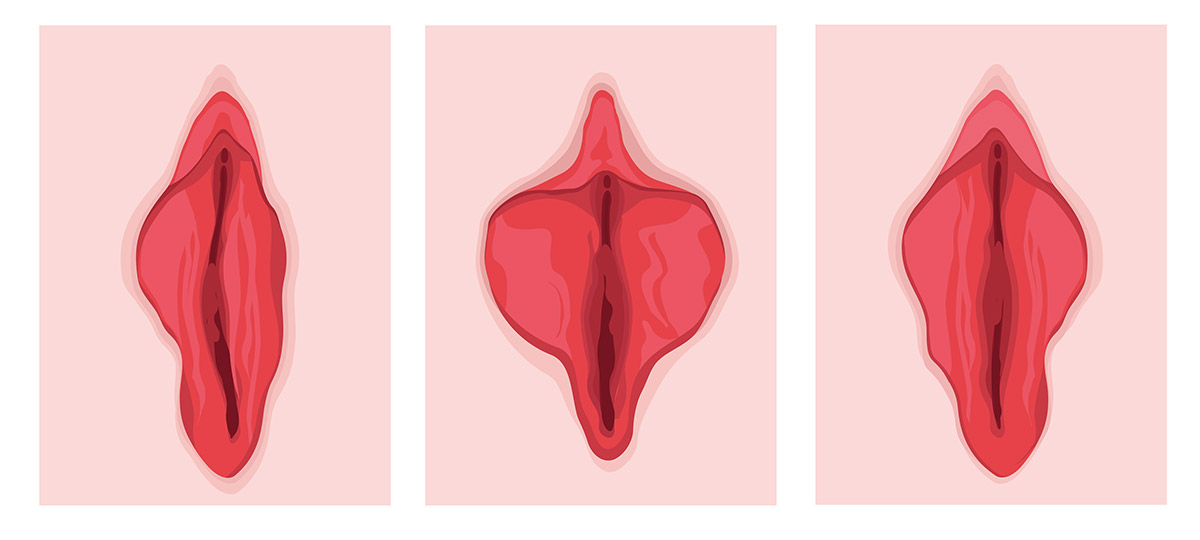
Como no se habla abiertamente de la anatomía vulvar, muchas mujeres crecen sin ver toda la gama de lo que es típico. Aunque no existe una estadística precisa que defina cuántas mujeres tienen labios vaginales prominentes, la experiencia clínica y la investigación anatómica muestran sistemáticamente que la variación es frecuente3. Tener labios menores que se extienden más allá de los labios externos entra dentro del espectro normal.
¿Por qué sobresalen los labios menores?
Las causas de unos labios menores prominentes no siempre son obvias, y rara vez son el resultado de algo que una mujer haya hecho o dejado de hacer. Sin embargo, en la mayoría de las situaciones, la explicación reside en cómo se forma y madura el cuerpo de forma natural. Algunos de los factores más comunes son los siguientes:
- La genética: La genética es uno de los principales factores que influyen en el tamaño, la forma y la simetría de los labios mayores. Al igual que la estatura o el color de los ojos, estos rasgos suelen heredarse. Algunas mujeres desarrollan de forma natural labios internos más largos o prominentes, y esto simplemente refleja la variación normal de la anatomía.
- Cambios hormonales durante la pubertad: La pubertad es un período importante de desarrollo de la vulva. A medida que aumentan los niveles de estrógeno, el tejido labial crece y madura. En algunas personas, este crecimiento hace que los labios menores se extiendan más allá de los labios externos. Esto es una parte normal del desarrollo y no un signo de un problema médico.
- Asimetría natural: Es muy común que un lado de los labios menores sea más largo o tenga una forma diferente al otro. El cuerpo humano rara vez es perfectamente simétrico, y la vulva no es una excepción. La asimetría por sí sola no indica un problema.
- Embarazo y envejecimiento: Los cambios hormonales y los cambios naturales del tejido a lo largo del tiempo pueden afectar al aspecto de los labios mayores. El embarazo puede alterar el aspecto del tejido, y el envejecimiento puede influir en la elasticidad de la piel. Estos cambios son graduales y forman parte de la progresión natural del cuerpo.
Cómo aliviar las molestias causadas por la hipertrofia labial
Aunque es normal que los labios menores sobresalgan, hay situaciones en las que el problema va más allá de lo estético. Cuando el exceso de tejido empieza a interferir con la comodidad diaria o la actividad física, puede ser una señal de que debe considerarse la posibilidad de un tratamiento o cuidados de apoyo. Los siguientes métodos pueden ayudar a reducir la irritación y mejorar la comodidad general.
Evite llevar ropa ajustada
Los leggings ajustados, las prendas de compresión y determinados tejidos sintéticos pueden aumentar la fricción en la región vulvar. Con el tiempo, ese roce constante puede provocar irritaciones. Cambiar a tejidos transpirables y prendas que no restrinjan demasiado puede ayudar a reducir la humedad y las rozaduras.
Elige ropa interior de apoyo y sin costuras
La ropa interior con costuras gruesas o bandas elásticas rígidas puede crear puntos de presión. Los estilos suaves, sin costuras, hechos de algodón o materiales que absorben la humedad pueden reducir la irritación. El objetivo es reducir la fricción constante contra el tejido sensible.
Haga pequeños ajustes en su rutina de ejercicios
En personas con tejido labial prominente, las actividades de alta fricción como el ciclismo o las carreras de resistencia pueden aumentar la irritación debido a la presión y el movimiento repetidos. En algunas mujeres, ese contacto repetido puede empeorar la irritación. Ligeros cambios como ajustar la postura, utilizar pantalones cortos o asientos acolchados o acortar la duración de los entrenamientos pueden ayudar a aliviar las molestias.
Mantener prácticas higiénicas suaves
Dado que la vulva es sensible, los limpiadores fuertes y los productos perfumados pueden a veces empeorar la irritación. Utilizar un limpiador suave y sin perfume y evitar lavados excesivos puede ayudar a mantener la piel confortable. Un enfoque sencillo suele ser el más eficaz.
Signos de que puede beneficiarse de un tratamiento profesional para su hipertrofia labial
Cuando los ajustes en el estilo de vida ya no proporcionan un alivio constante, puede ser el momento de examinar más detenidamente la causa subyacente. En algunos casos, las molestias persisten porque la cantidad o la posición del tejido labial crean una fricción continua que no puede controlarse totalmente con cambios externos.

Si los síntomas persisten a pesar de las medidas conservadoras, puede ser adecuada la evaluación por parte de un especialista certificado en cirugía vulvar. Estos son algunos indicadores de que puede valer la pena considerar un tratamiento profesional.
- Rozaduras persistentes en zonas concretas
- Dolor recurrente o sensación de tirón
- Hinchazón temporal tras una actividad física prolongada
- Malestar en la intimidad
- Dificultad para conseguir un alivio duradero y disminución de la confianza en uno mismo.
Para las mujeres cuyos síntomas persisten a pesar de los esfuerzos conservadores, el tratamiento avanzado puede ofrecer un alivio significativo. Labiaplasty NYC se especializa en procedimientos avanzados diseñados para remodelar y refinar los labios menores, preservando la sensación natural y la proporción.
LabiaSculpt™ es el método quirúrgico 3-en-1 patentado por Labiaplasty NYC, desarrollado para proporcionar un refinamiento genital integral. Esta técnica integra la remodelación de los labios menores, la restauración del volumen de los labios mayores a través de injertos de grasa, y el contorno del capuchón del clítoris dentro de un único plan quirúrgico.
Preguntas frecuentes sobre la hipertrofia labial
La hipertrofia labial es a menudo mal entendida, en gran parte debido a la limitada educación pública sobre la variación anatómica normal. Las siguientes respuestas abordan estas preocupaciones comunes desde una perspectiva médica.

Is it normal for my labia minora to stick out?
Sí, es completamente normal que los labios menores sobresalgan. Existe una amplia gama de variaciones naturales en el tamaño, la forma y la simetría de los labios. En muchas mujeres, los labios internos sobresalen de los labios externos, y esto por sí solo no indica ningún problema médico. Si no experimenta molestias, no suele haber motivos médicos de preocupación. Sin embargo, si presenta síntomas o el aspecto afecta a su calidad de vida, una consulta puede ayudarle a comprender mejor sus opciones.
Why does my labia minora stick out?
En el aspecto de los labios menores influyen varios factores biológicos, sobre todo la genética y el desarrollo hormonal. Durante la pubertad, los estrógenos estimulan el crecimiento y la maduración del tejido vulvar. En algunas mujeres, esto hace que los labios menores se extiendan más allá de los labios externos.
Can sex cause my labia minora to stick out?
No, el sexo no hace que sobresalgan los labios menores. El tamaño y la forma de los labios vienen determinados principalmente por la genética y el desarrollo hormonal, sobre todo durante la pubertad. La actividad sexual no estira ni agranda permanentemente el tejido labial. Es normal que los labios se hinchen temporalmente durante la excitación debido al aumento del flujo sanguíneo. Esta hinchazón desaparece poco después y no modifica la anatomía a largo plazo.
Do tight clothes make my labia minora larger?
No, la ropa ajustada no agranda permanentemente los labios menores. Sin embargo, la ropa ajustada puede aumentar la fricción y atrapar la humedad, provocando irritación o hinchazón temporal.
Can labial hypertrophy go away on its own?
En la mayoría de los casos, la hipertrofia labial no desaparece por sí sola. Actualmente no existe ninguna medida universalmente aceptada que defina la hipertrofia labial. Una vez que los labios menores se han desarrollado por completo, su tamaño y forma no varían. En la práctica clínica, el término suele reservarse para los casos en que el tejido labial provoca síntomas físicos persistentes como dolor, irritación o interferencias con las actividades cotidianas.
Consigue un tratamiento especializado de hipertrofia labial en NYC
Muchas mujeres con labios prominentes no necesitan tratamiento médico, sobre todo si no experimentan molestias. En algunos casos, basta con cambiar la ropa o la actividad. Pero cuando los síntomas continúan o empiezan a afectar a su rutina, es importante obtener información clara y fiable. Saber por qué se produce la hipertrofia labial y cómo puede tratarse le ayudará a avanzar con confianza.
En Labiaplasty NYC, especialistas experimentados proporcionan consultas personalizadas y atención avanzada diseñada para abordar las preocupaciones funcionales y estéticas. Nuestro equipo utiliza técnicas innovadoras y mínimamente invasivas para ayudar a las mujeres a lograr una comodidad, simetría y confianza duraderas. Usted puede reservar una consulta gratuita para discutir sus objetivos y aprender cómo un plan de tratamiento a medida podría apoyar sus necesidades.
Referencias
- Reddy, J., & Laufer, M. R. (2010). Hypertrophic labia minora. Journal of Pediatric and Adolescent Gynecology, 23(1), 3-6. https://doi.org/10.1016/j.jpag.2009.01.071
- Koops, T. U., Wilkinson, C., Perry, G., Wilkinson, S., & Silverio, S. A. (2021). Making the cut: Mass media and the growing desire for genital cosmetic surgery by young women and girls. En C.-H. Mayer, E. Vanderheiden, & P. T. P. Wong (Eds.), The Meaning of Shame in Cultures of the 4th Industrial Revolution (pp. 219-243). Springer. https://doi.org/10.1007/978-3-030-59527-2_11
- Sasson, D. C., Sharp, G., & Placik, O. J. (2024). ¿Lo hizo o no lo hizo? Perceptions of operative status of female genitalia. Revista de Cirugía Estética, 44(11), 1203-1208. https://doi.org/10.1093/asj/sjae130